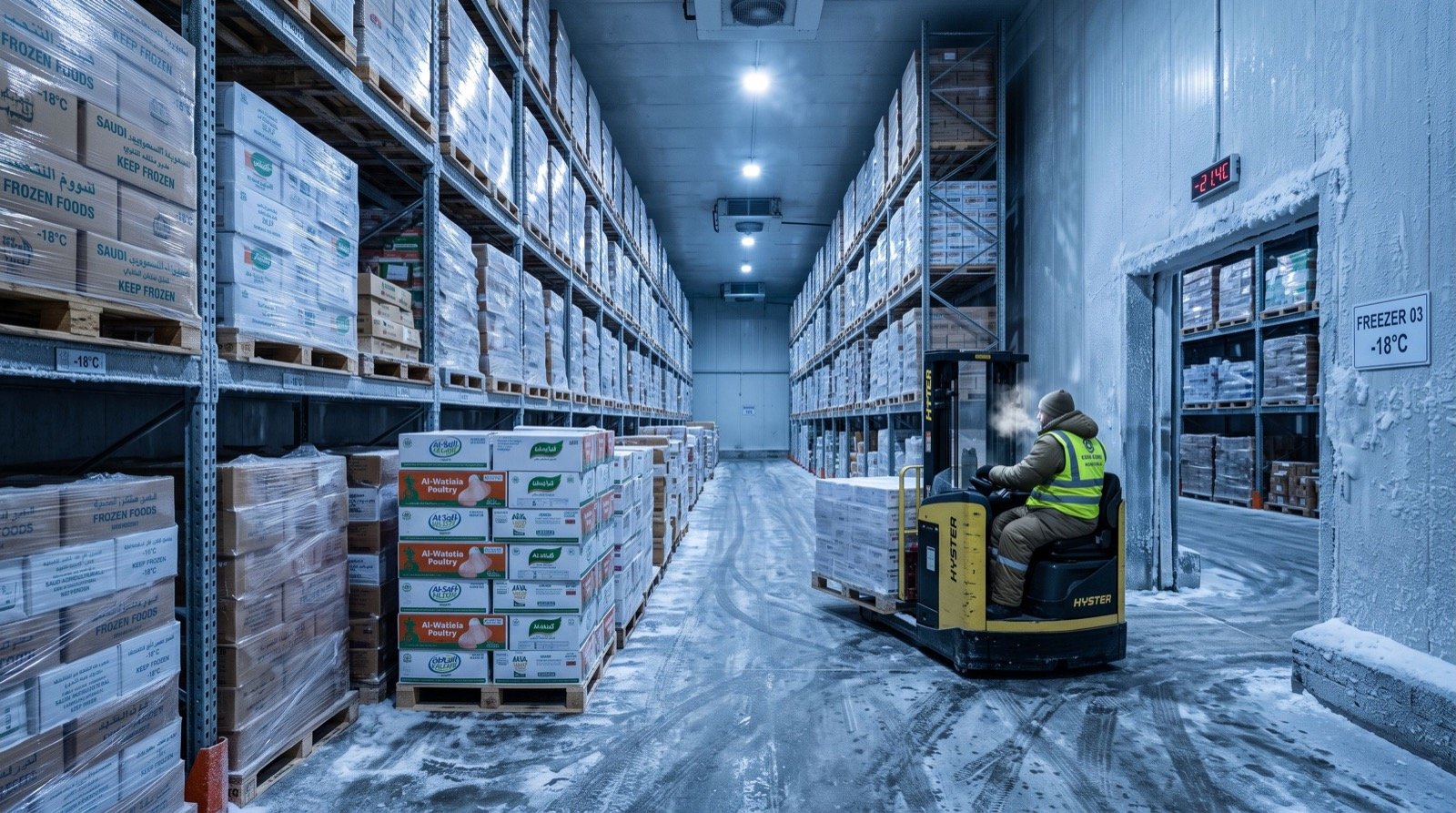
The cold chain in Saudi Arabia is the invisible backbone of everything from your morning dairy to life-saving vaccines. Nowhere is it more critical than in the Eastern Province, where Dammam’s port and industrial corridor handle vast volumes of frozen and chilled cargo destined for the whole Gulf. In this 2026 guide we unpack how frozen and chilled storage really work, the specifications that separate a safe facility from a risky one, and how to build a cold chain that never breaks.
If you import seafood, meat, dairy, or pharmaceuticals through the Eastern Province, the difference between profit and write-off often comes down to a few degrees. Let’s dig in.
Understanding the Cold Chain in Saudi Arabia
A cold chain is an unbroken sequence of temperature-controlled storage and transport, from producer to consumer. Break it at any single point—a warm dock, a stalled reefer, an over-full freezer—and the whole shipment is compromised, often invisibly until the product fails on the shelf.
The World Health Organization reports that a significant share of vaccines are wasted globally each year due to cold-chain failures, a sobering reminder that temperature discipline is a matter of public health, not just logistics. Reliable Chilled Storage in Saudi Arabia anchors that chain for perishables between 0°C and 8°C.
Why Dammam is a cold-chain hub
Dammam’s King Abdulaziz Port, its rail link to Riyadh, and its concentration of industry make it the natural gateway for temperature-sensitive imports into central and eastern Saudi Arabia. Positioning frozen stock here shortens the most vulnerable leg of the journey.
Frozen vs Chilled Storage: Know the Difference
Frozen and chilled are not interchangeable, and using the wrong one destroys product. The table below shows how each zone performs and where it belongs in your supply chain.
| Factor | Chilled Storage | Frozen Storage |
|---|---|---|
| Temperature | 0°C to 8°C | −18°C to −25°C |
| Typical shelf life | Days to a few weeks | Months |
| Best products | Dairy, produce, vaccines | Meat, seafood, ice cream |
| Energy demand | Moderate | High |
| Thaw sensitivity | Low | High—refreezing is unsafe |
For long-hold protein and seafood moving through the Eastern Province, dedicated Frozen Storage in Dammam delivers the deep, stable cold that keeps product safe for months.
The refreeze trap
Once a frozen product partially thaws, bacteria that were dormant become active. Refreezing may restore the temperature but not the safety. This is why continuous frozen monitoring is non-negotiable, not a nice-to-have.
What Makes a Frozen Storage Facility Truly Reliable?
Reliability is engineered, not promised. When you evaluate a facility, look past the sales brochure and verify the systems that keep product safe when something goes wrong at 2 a.m.
- Redundant refrigeration: backup compressors so one failure does not thaw a chamber.
- Standby power: automatic generators that start within seconds of an outage.
- Continuous data logging: tamper-proof temperature history for audits and claims.
- Alarm escalation: alerts that reach staff instantly, day or night.
- Trained handling teams: fast, disciplined transfer that minimises door-open time.
Partnering with an experienced local team that understands Eastern Province logistics means fewer surprises and faster resolution when they occur.
Building a Cold Chain That Never Breaks: A Step-by-Step Approach
- Define the exact temperature band for every product line.
- Pre-cool transport vehicles before loading anything.
- Minimise dock exposure—stage nothing outdoors in the heat.
- Log temperatures at every handover, not just in storage.
- Use FEFO rotation to move oldest stock first.
- Audit your provider’s excursion reports quarterly.
An original insight from the loading bay
Track your “excursion minutes” as a monthly KPI—the total time any product spent outside its target range. Most operations only react to alarms; measuring the accumulated exposure reveals slow, systemic problems (a leaky door seal, a slow forklift route) long before they cause a loss. What gets measured gets fixed.
Best Practices for Cold Storage in the Saudi Climate
Extreme ambient heat magnifies every mistake. Keep freezer doors closed with air curtains or strip barriers, schedule inbound deliveries for cooler hours where possible, and never overload chambers—airflow is what actually maintains temperature. Regular defrost cycles and coil maintenance keep efficiency high through the brutal summer months.
Above all, treat documentation as product protection. A complete, tamper-proof temperature record is your evidence of compliance and your defence in any dispute with a buyer or regulator.
Technology Driving the Modern Cold Chain in 2026
The cold chain has quietly gone digital. Internet-of-things sensors now stream temperature, humidity, and door-status data to cloud dashboards in real time, so a manager in Riyadh can see the condition of a frozen chamber in Dammam from a phone. This visibility turns reactive firefighting into proactive prevention.
Blockchain-backed traceability is also gaining ground for high-value pharmaceutical and seafood shipments, creating a tamper-proof record from origin to delivery. Combined with predictive maintenance—where analytics flag a compressor likely to fail before it does—these tools are steadily driving spoilage rates down across the Eastern Province.
Why data matters for compliance
Regulators and major buyers increasingly expect complete, exportable temperature records rather than handwritten logs. A facility with robust digital monitoring can produce an audit trail in minutes, which speeds customs clearance, supports insurance claims, and builds the trust that wins long-term contracts. When you evaluate a provider, treat their data capabilities as seriously as their refrigeration capacity.
Frequently Asked Questions
What is the ideal temperature for frozen storage?
Frozen storage typically maintains −18°C to −25°C. This deep-cold range halts bacterial activity and preserves meat, seafood, and other frozen goods safely for months, provided the temperature stays continuous without thaw-refreeze cycles.
What happens if the cold chain breaks?
A break allows temperatures to rise into the danger zone, letting bacteria multiply and product quality degrade—often invisibly. Even if the item is later re-cooled, safety and shelf life are already compromised, which is why continuous monitoring matters.
Why choose Dammam for frozen storage?
Dammam offers direct port access, rail and highway links to Riyadh and the wider Gulf, and a dense industrial base. Storing frozen goods here shortens the most temperature-sensitive transport legs and speeds distribution across the Eastern Province.
How is chilled storage different from frozen storage?
Chilled storage holds products at 0°C to 8°C for short-shelf-life perishables like dairy and produce, while frozen storage uses far colder temperatures to preserve goods for months. They serve different products and are never interchangeable.
Conclusion: Keep Your Cold Chain Unbroken
A resilient cold chain in Saudi Arabia protects your margins, your reputation, and—in the case of food and medicine—public safety. Match each product to the right zone, demand redundancy and continuous monitoring, and work with a partner who knows the Eastern Province inside out. Ready to strengthen your 2026 supply chain? Explore purpose-built chilled and frozen storage solutions in Dammam today and never lose another shipment to the heat.